


Muscle BioAmp Patchy#
v0.2
Overview#
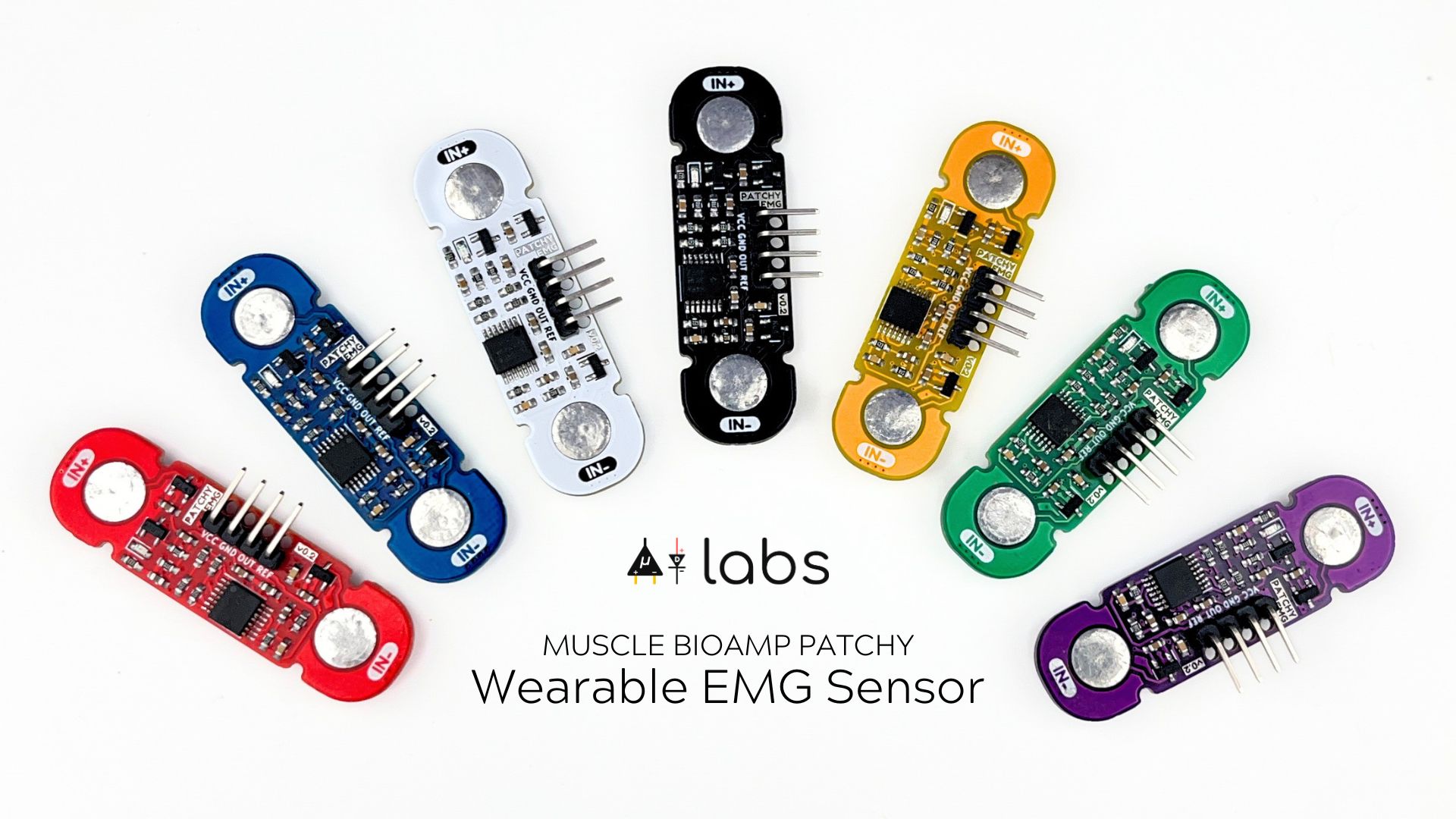
Muscle BioAmp Patchy is a wearable ElectroMyoGraphy or EMG sensor that snaps directly to gel electrodes and connects to your muscle like a patch. It comes with reverse polarity projection, power indicator, onboard snap connectors, and Upside Down Labs’ powerful BioAmp sensing technology for precise muscle signal recording. This enables you to easily integrate this sensor in your EMG- based Human-Computer Interface (HCI) easily.
Features & Specifications#
Operating Voltage |
5 V |
Input Impedance |
10^12 ohm |
Fixed Gain |
x2420 |
Bandpass filter |
72 – 720 Hz |
Wearable |
Yes |
Compatible Hardware |
Any development board with an ADC (Arduino UNO & Nano, Adafruit QtPy, STM32 Blue Pill, BeagleBone Black, Raspberry Pi Pico, to name just a few) or a standalone ADC of your choice |
BioPotentials |
EMG (Electromyography) |
No. of channels |
1 |
Electrodes |
3 (Positive, Negative, and Reference) |
Dimensions |
4.7 x 1.4 cm |
Open Source |
Hardware + Software |
Hardware#
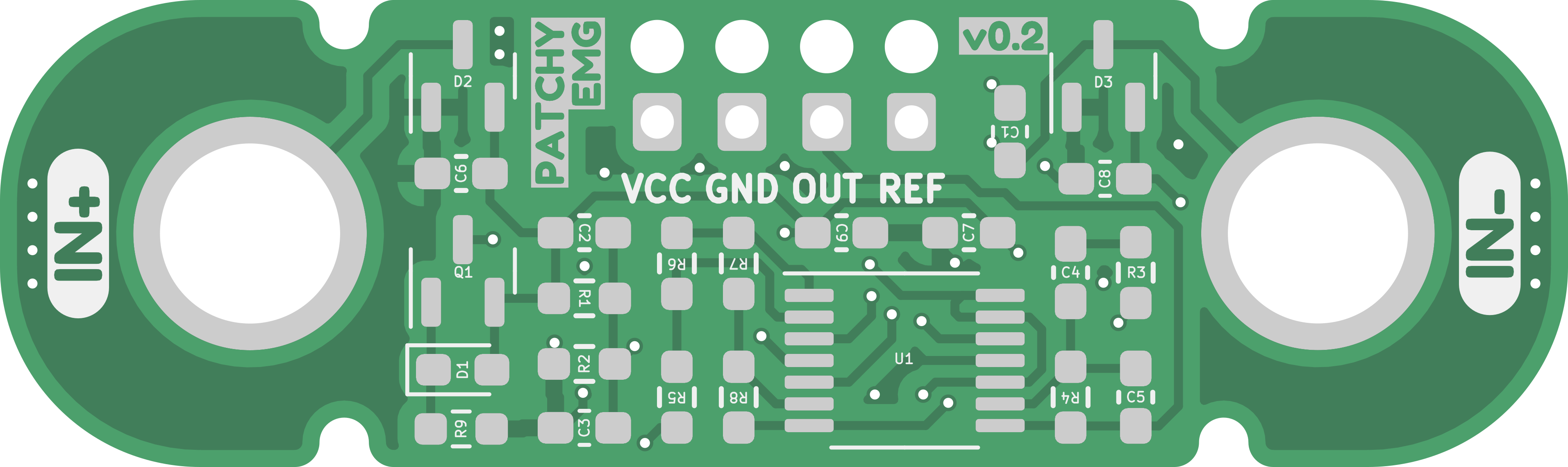
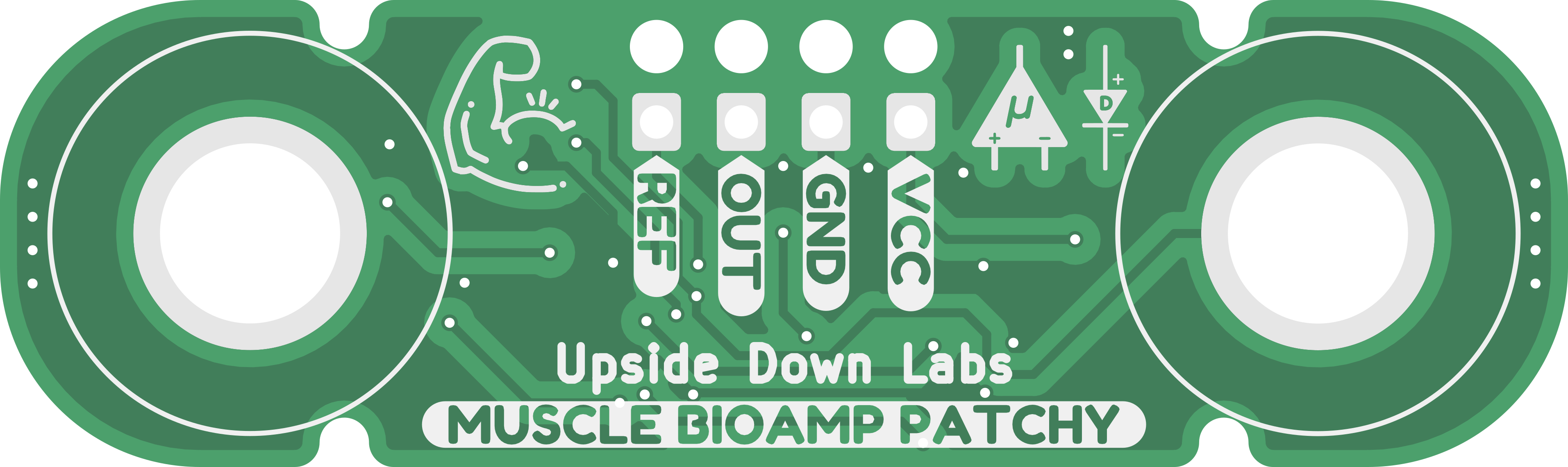
Images below shows a quick overview of the hardware design.
PCB Front#
PCB Back#
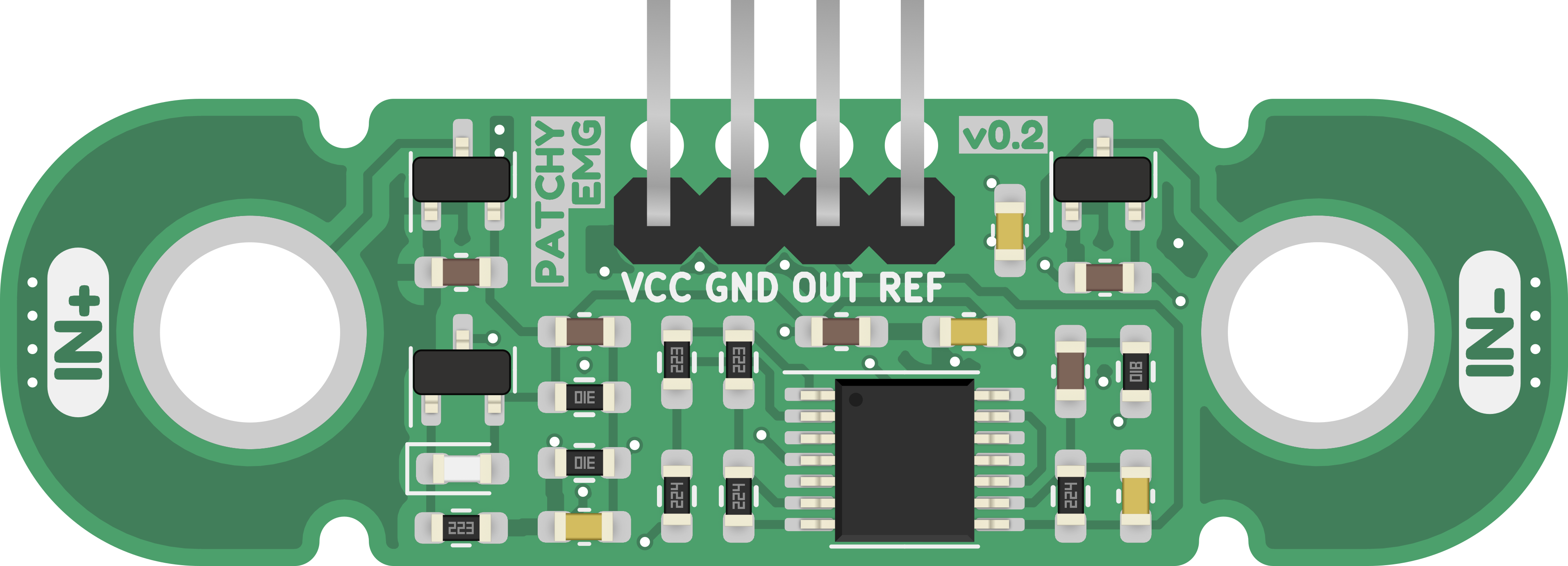
Assembled PCB#
Contents of the kit#
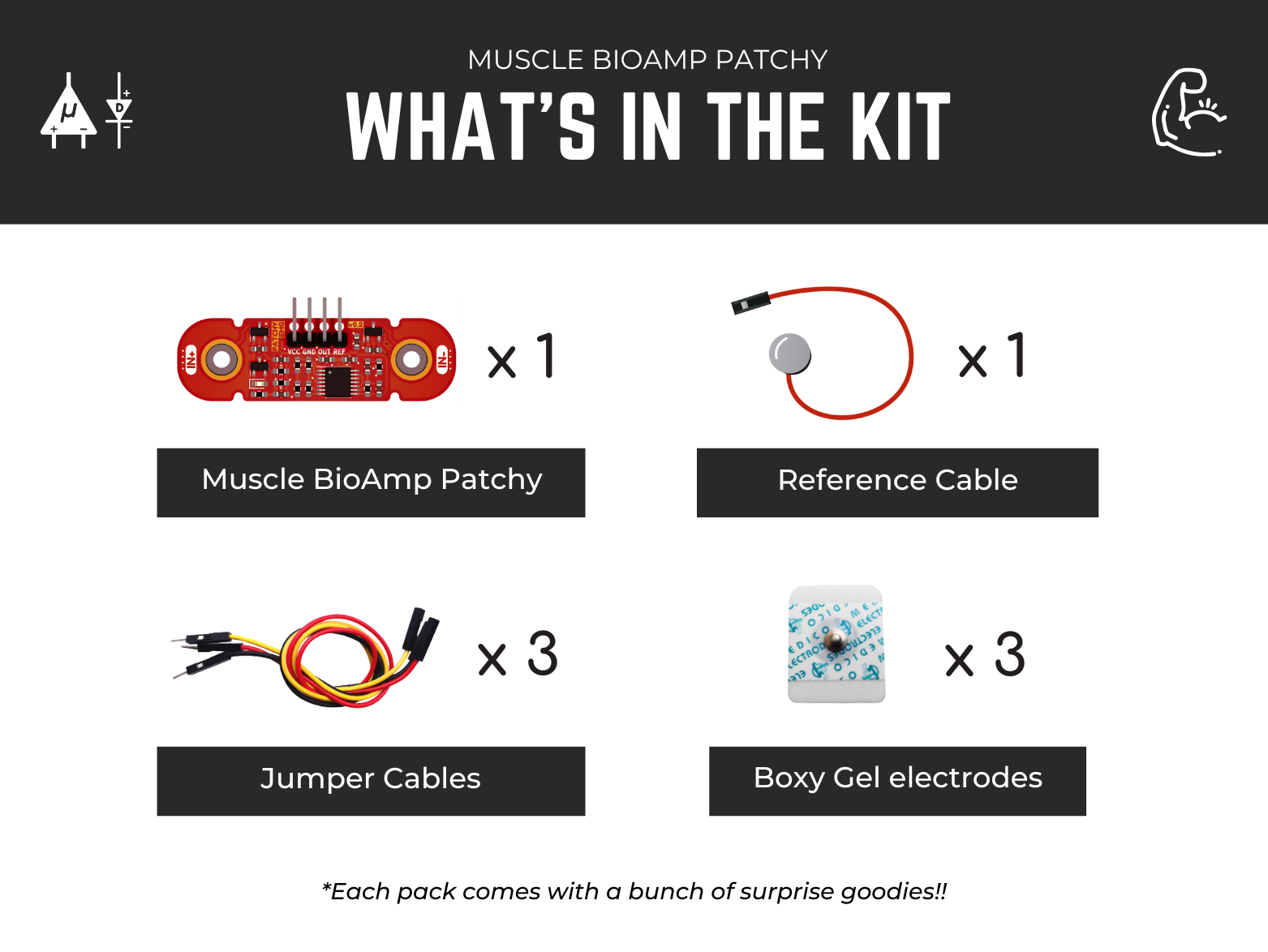
We have made a complete unboxing video of the kit. Please find the link below:
Software requirements#
Arduino IDE
Latest Version (v2.3.8+): Arduino IDE Latest Version Download (Recommended for faster compilation and enhanced support for the latest Arduino UNO Development Boards)
Legacy Version (v1.8.19): Arduino IDE v1.8.19 (legacy IDE) Download (For Real-time signal visualization using a better built-in Serial Plotter)

Chords Web Visualizer
Use Chords Web, our custom web interface designed to visualize biopotential signals data directly in your browser. (Plug-and-play signal visualization directly in any modern web browser.) Flash the Chords-Arduino-Firmware on your board to visualize signals on Chords Web.
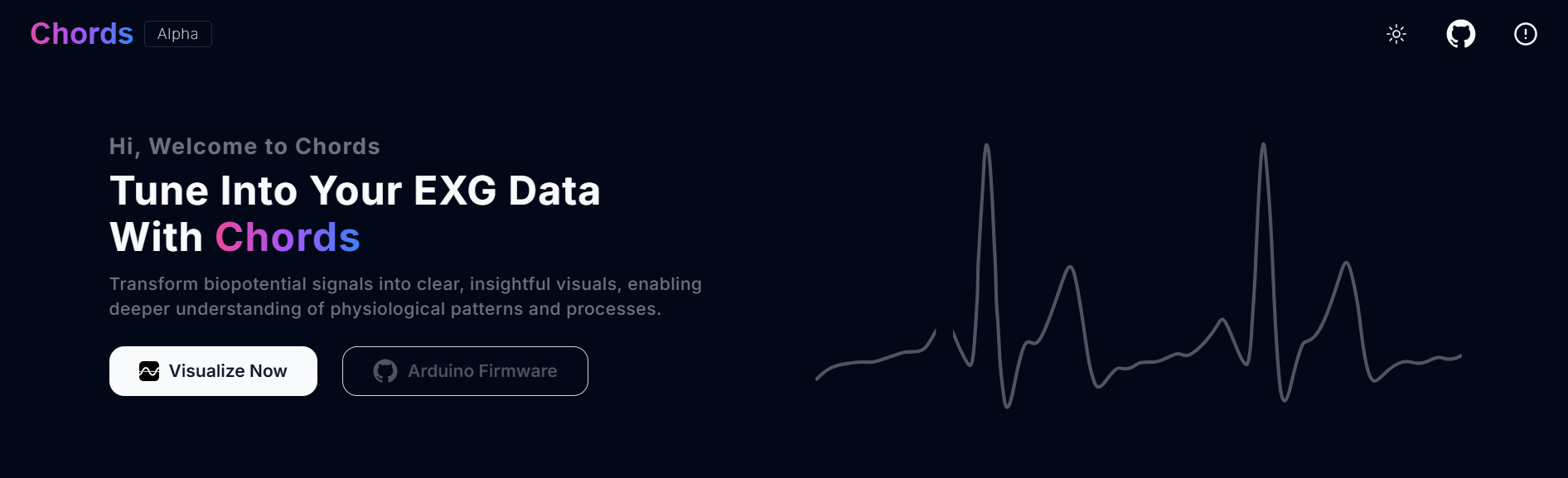
Chords Web Landing Page#
Using the kit#
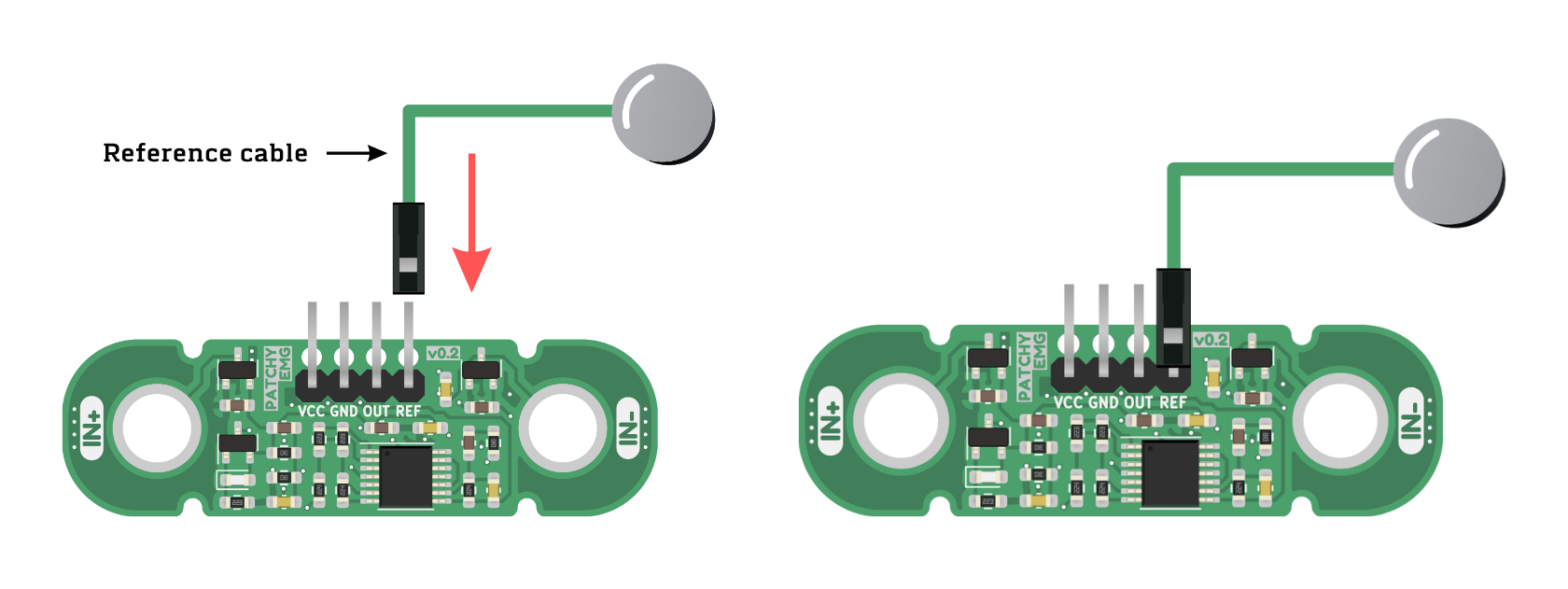
Step 1: Connect reference cable#
Connect the reference cable to the Muscle BioAmp Patchy as shown in the diagram.
Step 2: Connecting sensor to gel electrodes#
Snap the Muscle BioAmp Patchy on the gel electrodes (Don’t peel the plastic backing from the electrodes at this moment).
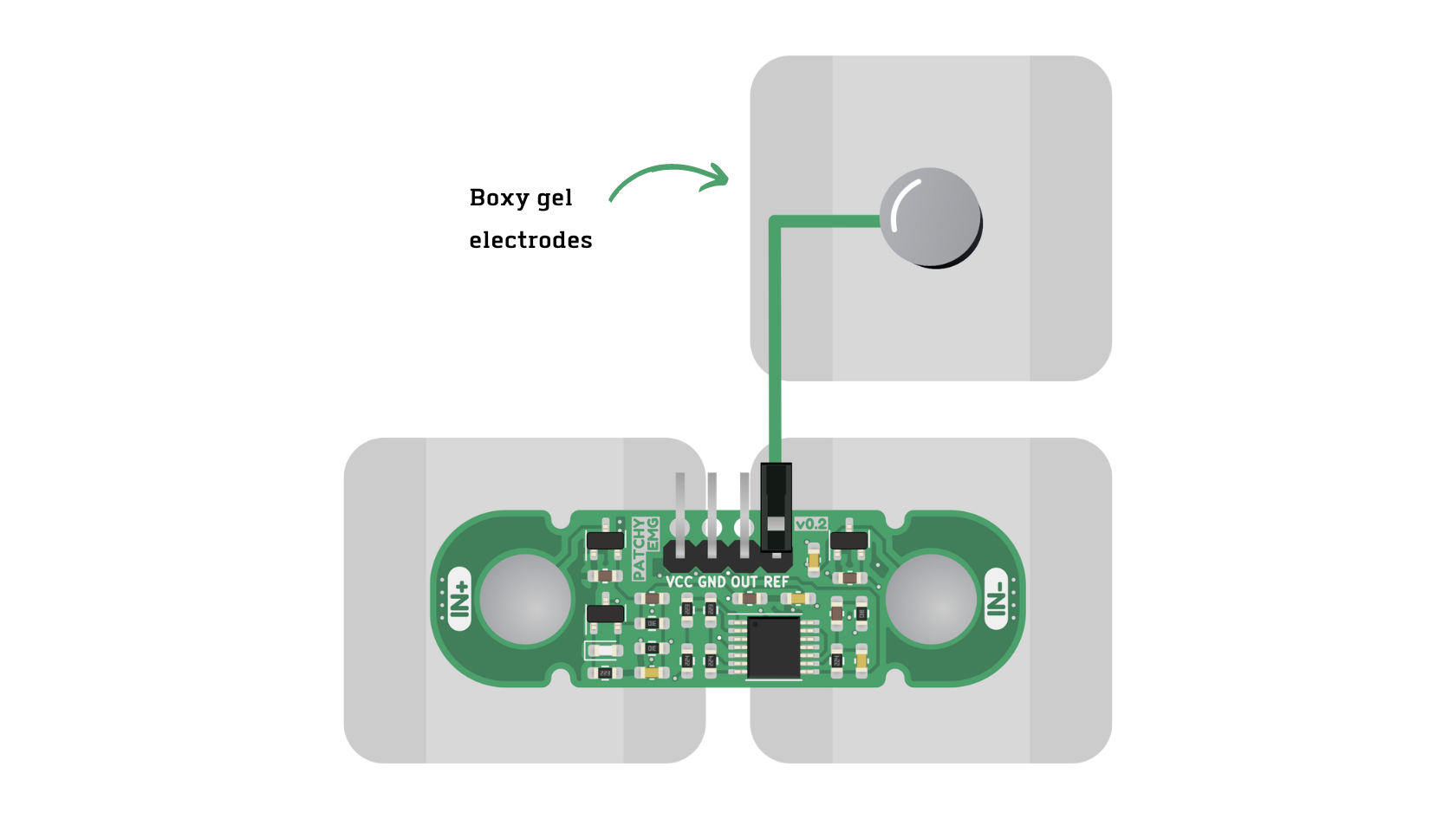
Step 3: Skin Preparation#
Apply Nuprep Skin Preparation Gel on the skin surface where electrodes would be placed to remove dead skin cells and clean the skin from dirt. After rubbing the skin surface thoroughly, clean it with an alcohol wipe or a wet wipe.
For more information, please check out detailed step by step Skin Preparation Guide.
Step 4: Electrode Placements#
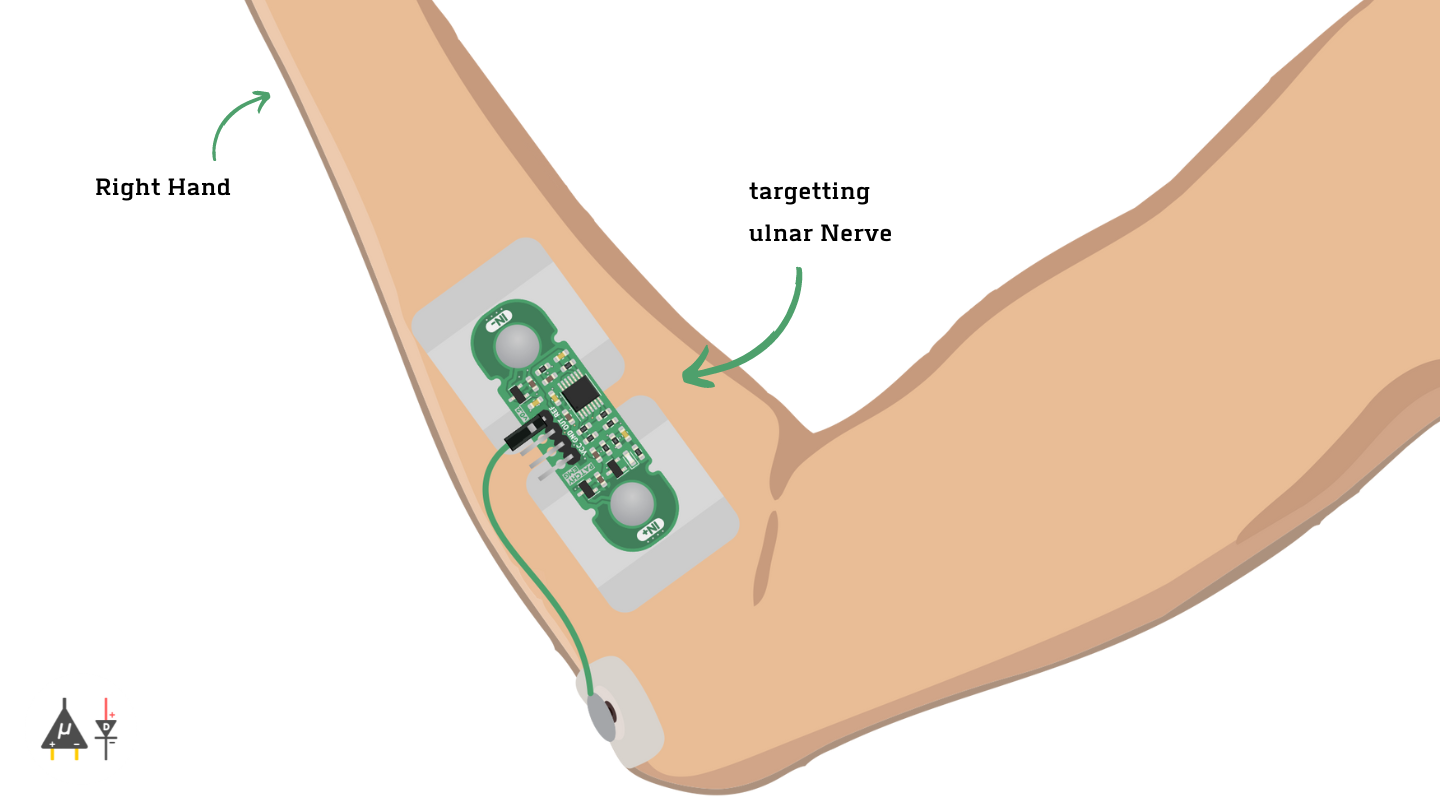
Now peel off the plastic backing from the gel electrodes and place the Muscle BioAmp Patchy on the targeted muscle and the reference on the bony part of your elbow as shown in the diagram.
Note
In this demonstration we are recording EMG signals from the ulnar nerve, but you can record EMG from other areas as well (biceps, triceps, legs, jaw etc) as per your project requirements. Just make sure to place the IN+, IN- electrodes on the targeted muscle and REF on a bony part.
Step 5: Connect Arduino UNO R3#
Connect VCC to 5V, GND to GND, and OUT to Analog pin A0 of your Arduino UNO via jumper cables provided by us. If you are connecting OUT to any other analog pin, then you will have to change the INPUT PIN in the arduino sketch accordingly.
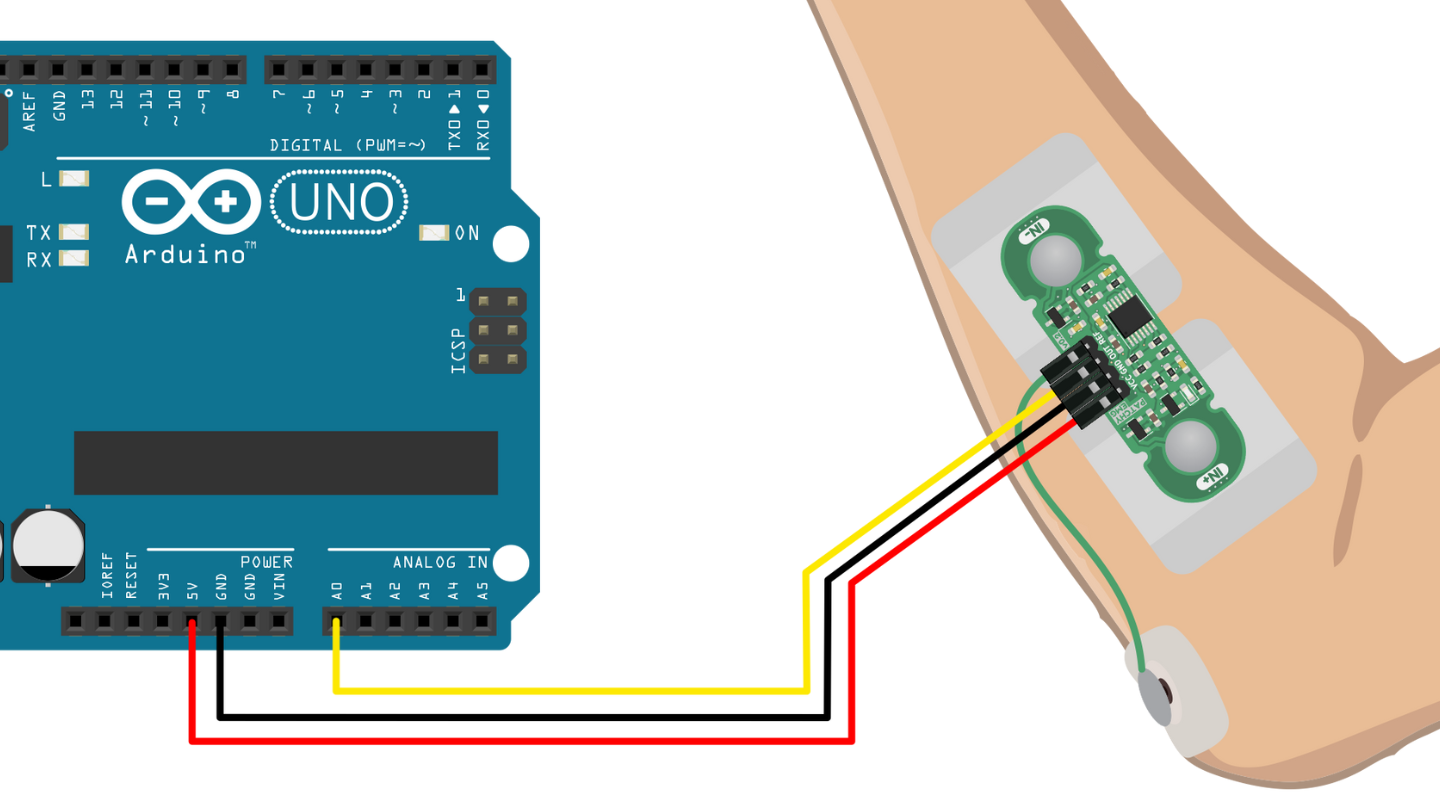
Connections with Arduino UNO R3#
Note
For demonstration purposes we are showing connections of the sensor with Arduino UNO R3 but you can use any other development board or a standalone ADC of your choice.
Step 6: Upload the code#
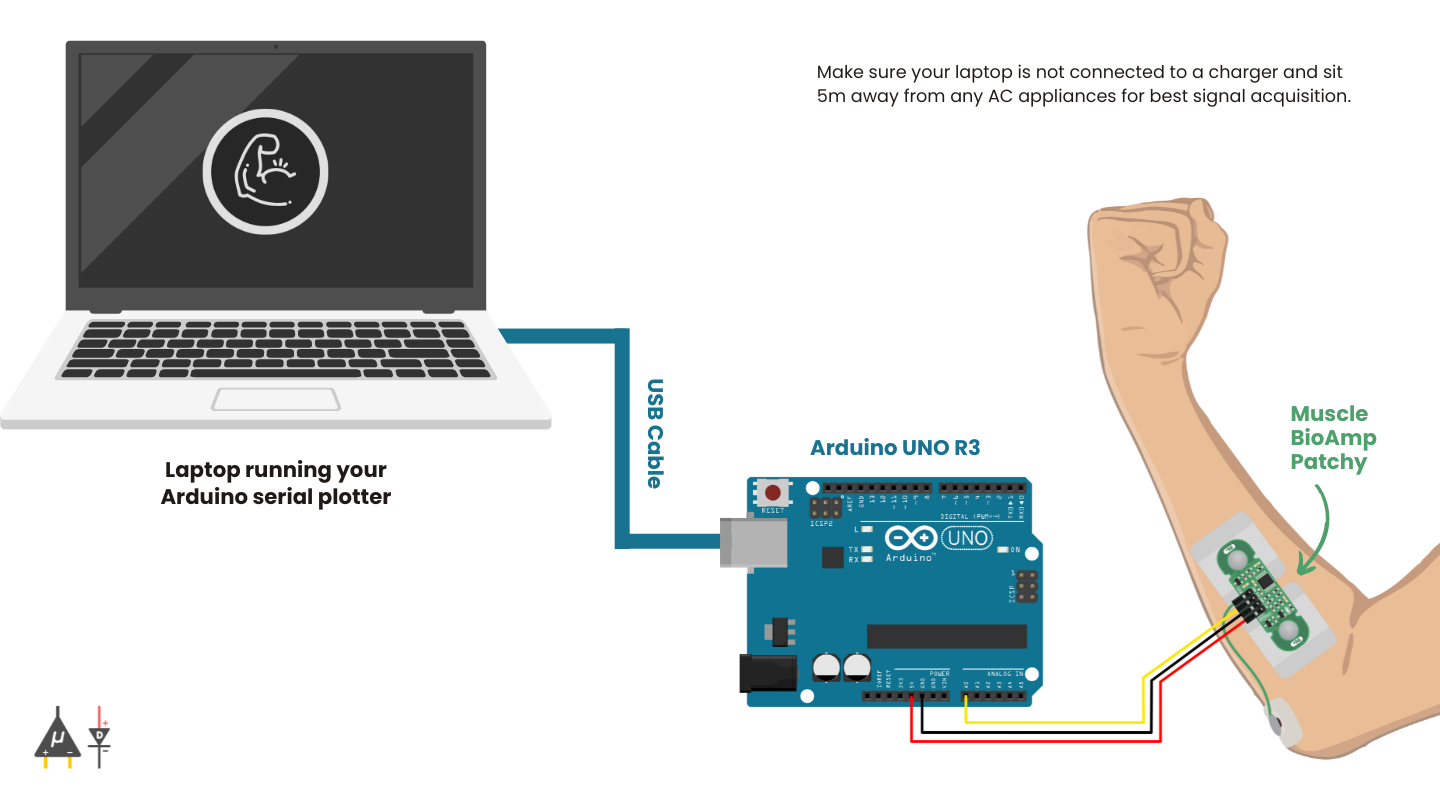
Connect your Arduino UNO Development Board to your laptop using the USB cable.
Copy paste any one of the arduino sketches given below in
Arduino IDE latest version (v2.3.8+):
Go to
Toolsmenu, navigate toBoard, and select Arduino UNO Development Board (UNO R3/ R4/ Minima/ WiFi or any other board).In the same menu, select the
Portto which your Arduino Uno is connected.Tip: To find the correct COM Port, disconnect your board and reopen the menu. The entry that disappears should be the right COM port.
Uploadthe code.
Warning
For the best signal acquisition, ensure your laptop is not connected to a charger and maintain a distance of at least 5m from any AC appliances, read more about Tips for better signal acquisition.
Step 7: Visualizing the EMG signals#
Using Chords Web
For visualizing the EMG signals, use Chords Web for quick and hassle-free real-time bio-potential signals visualization right from your browser, without installing any software.
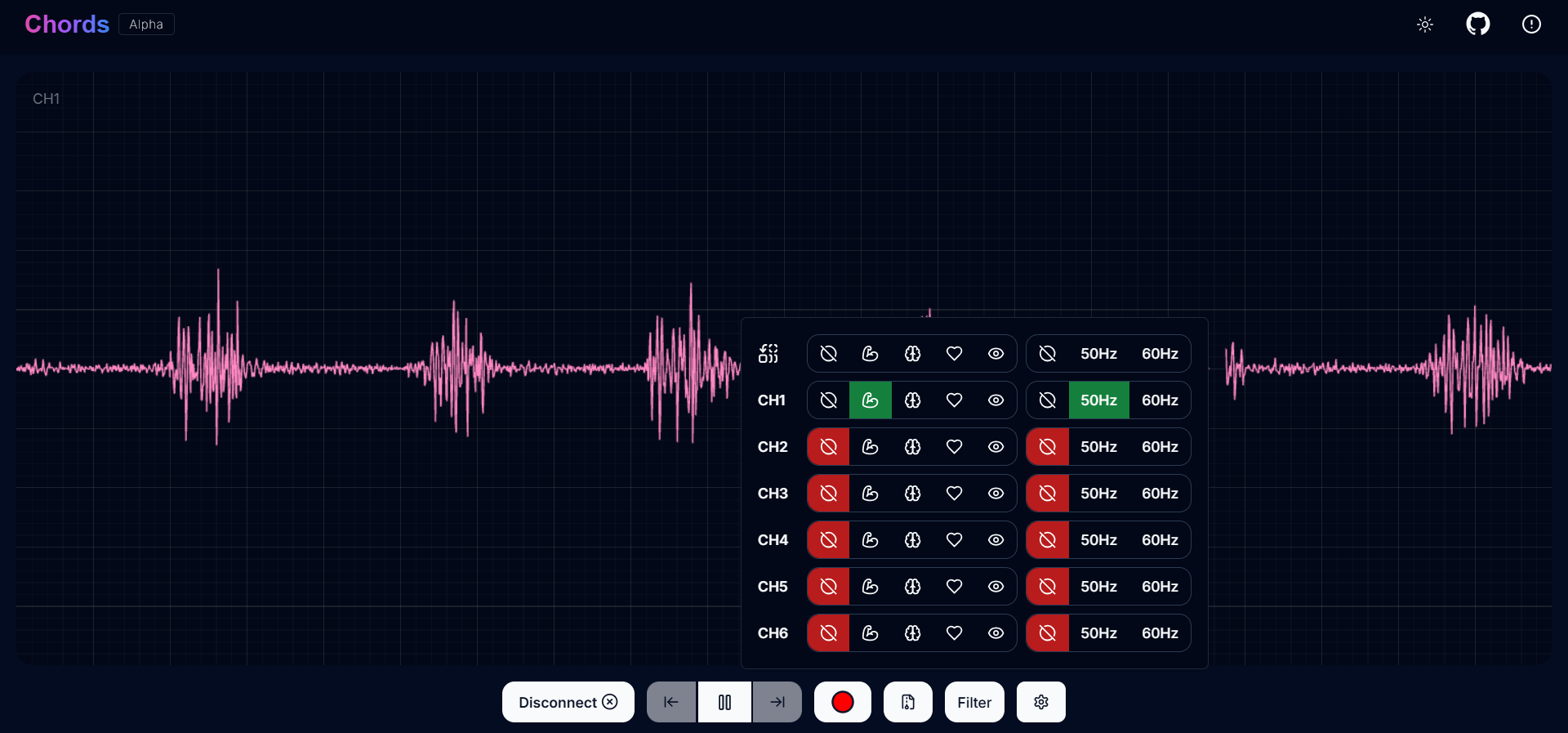
Visualizing EMG signals on Chords Web#
Now flex your arm to visualize the muscle signals in real-time on your laptop.
Using Arduino legacy v1.8.19
To visualize the signal on Arduino v1.8.19 we will use inbuilt Serial Plotter:
Navigate to (
Tools>Board) and select your Development board or Arduino UNO Board (if not detected automatically).Open the Serial Plotter (
Tools>Serial PlotterorCtrl+Shift+L) to visualize the EMG signals.Once the Serial Plotter is open, ensure the baud rate is set to
115200.Now flex your arm to visualize the muscle signals in real time on your laptop.
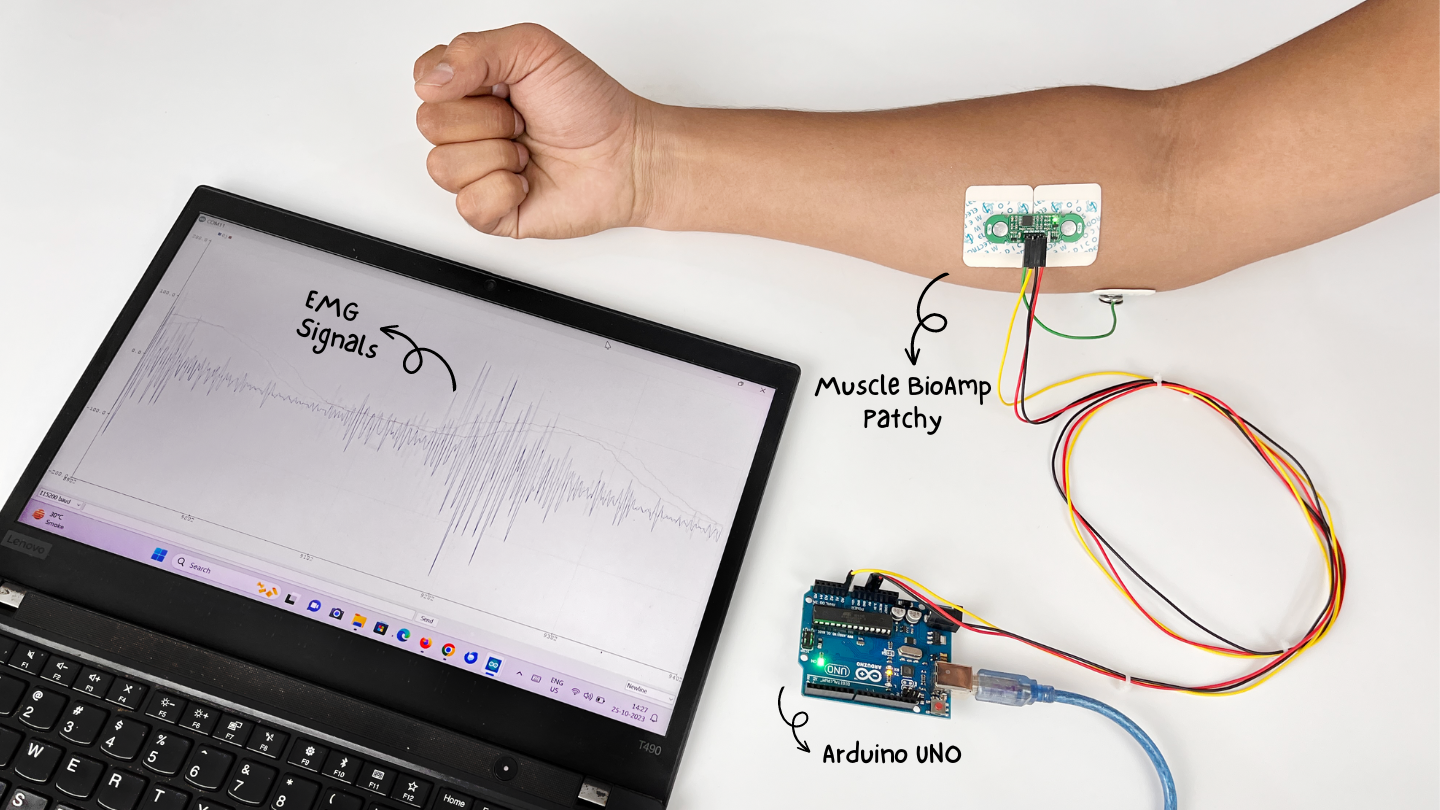
Visualizing EMG signals on Arduino IDE v1.8.x#
Video Tutorial#
If you prefer a visual walkthrough, check out our video tutorial: