


Course Curriculum#
What This Course Will Cover#
Across Modules 1 to 10, this course systematically guide you through:
Fundamental neuroscience concepts relevant to biopotential signals
Neural signaling, action potentials, and synaptic transmission
Signal characteristics, frequency ranges, and noise sources
Practical perspectives on EEG, EMG, ECG and EOG
Real-world clinical, research and human-computer interaction applications
At the end of this course, you will not just be familiar with terminology, you understand where these signals come from, why they matter, and how they can be acquired and used responsibly.
This knowledge forms the backbone for innovation in biomedical engineering, neuroscience research, assistive technology, and open-source health solutions.
Course Content#
This course is divided into 11 modules, each covering a specific aspect of neuroscience and biopotential signal acquisition. The modules are designed to build upon each other, providing a comprehensive understanding of the nervous system and its electrical activity.
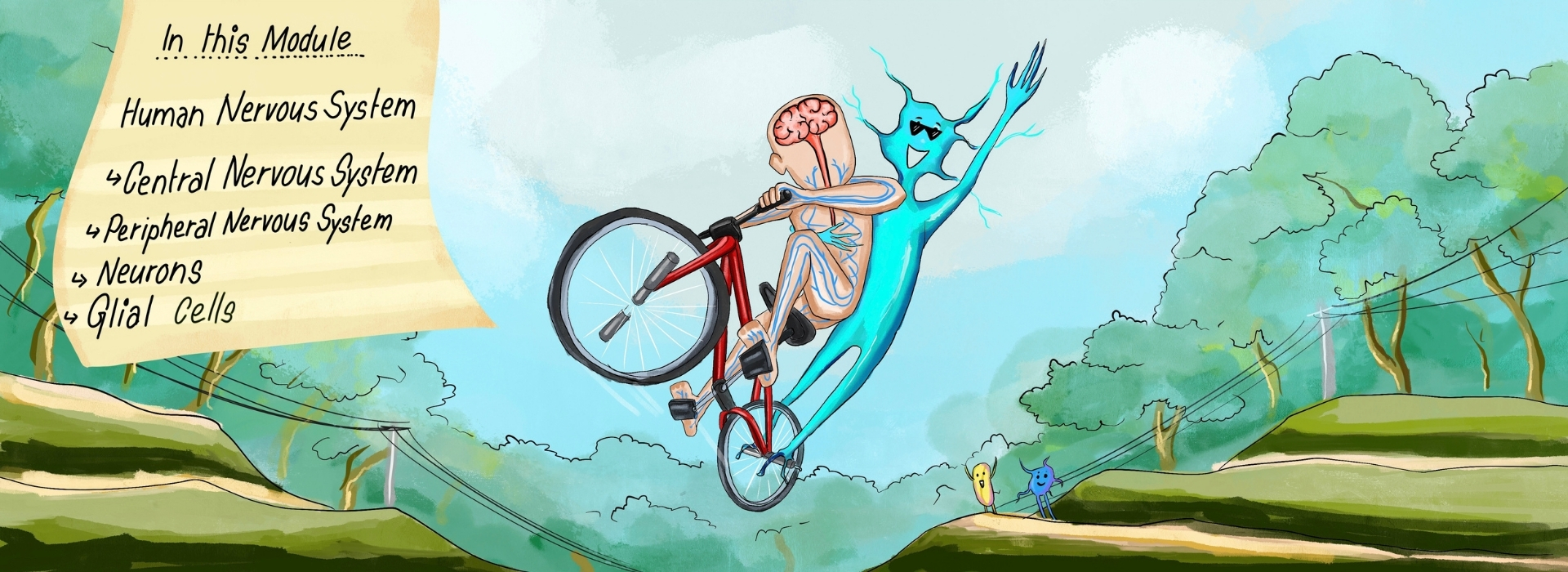
Module 1: Human Nervous System#
An overview of the human nervous system, its structure, and function.
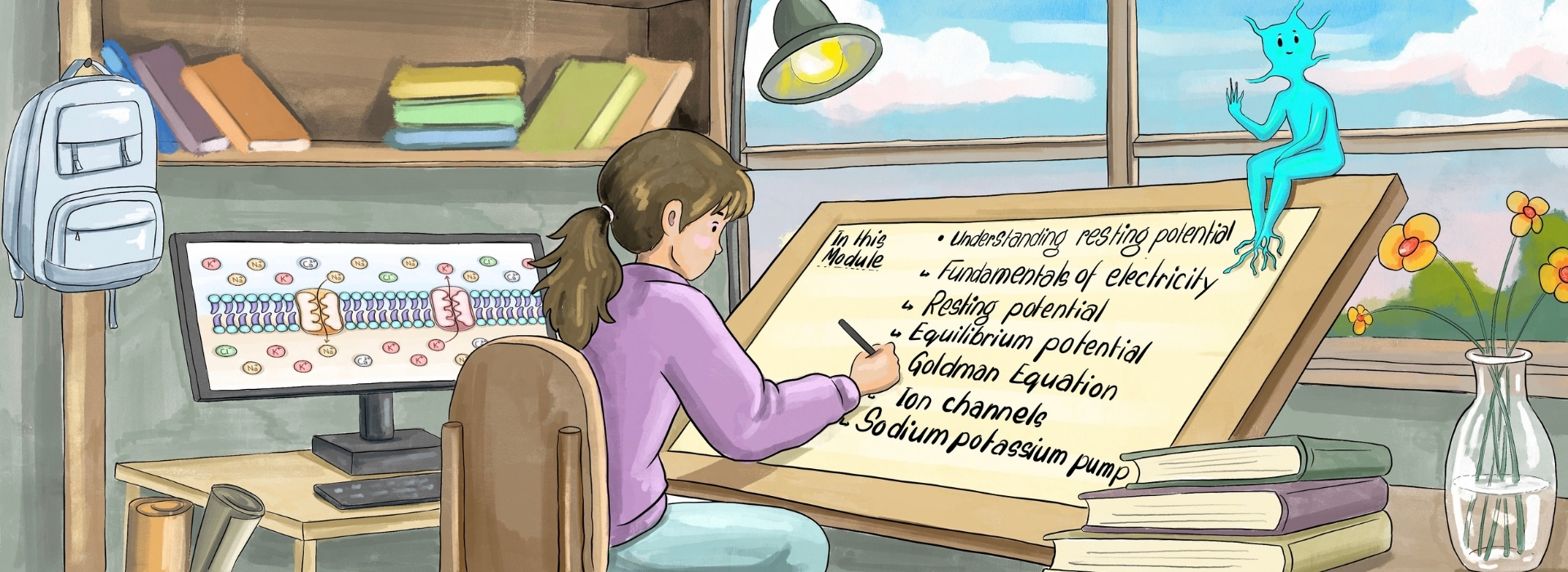
Module 2: Understanding the Resting Potential#
Exploration of the resting membrane potential and its significance in neuronal function.
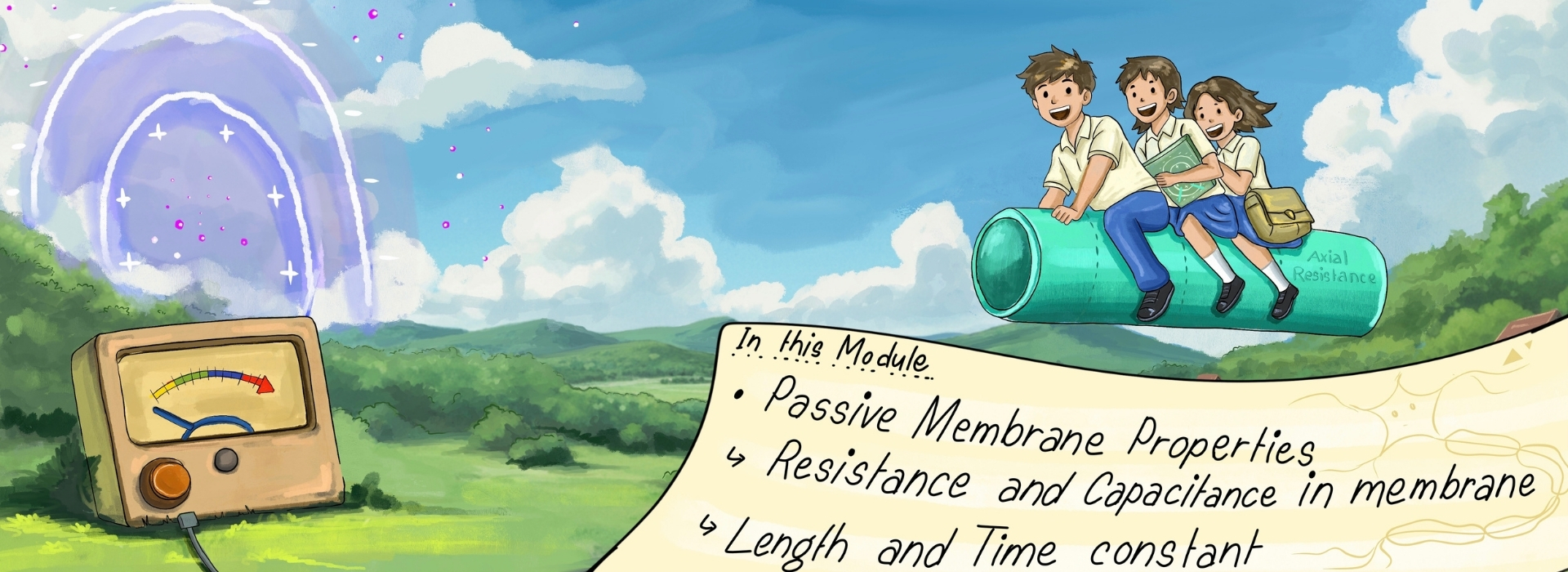
Module 3: Passive Membrane Properties#
Study of the passive electrical properties of neuronal membranes.
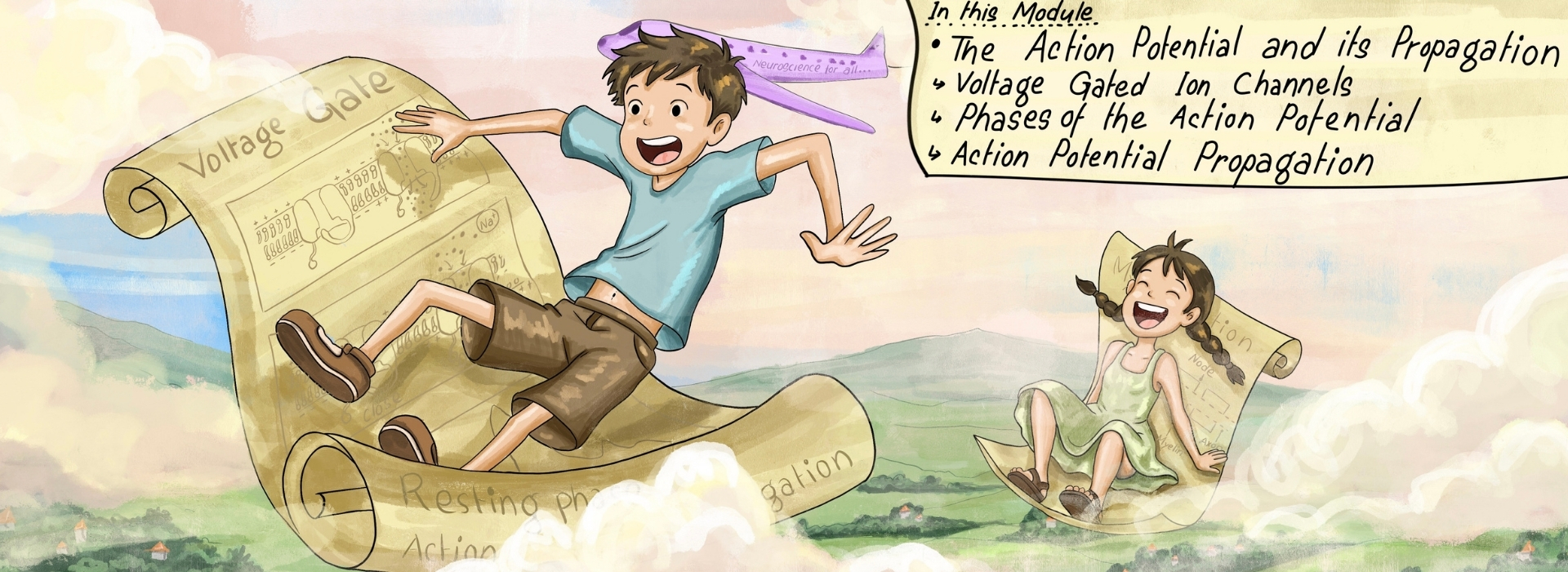
Module 4: The Action Potential and its Propagation#
Detailed examination of the action potential generation and propagation mechanisms.
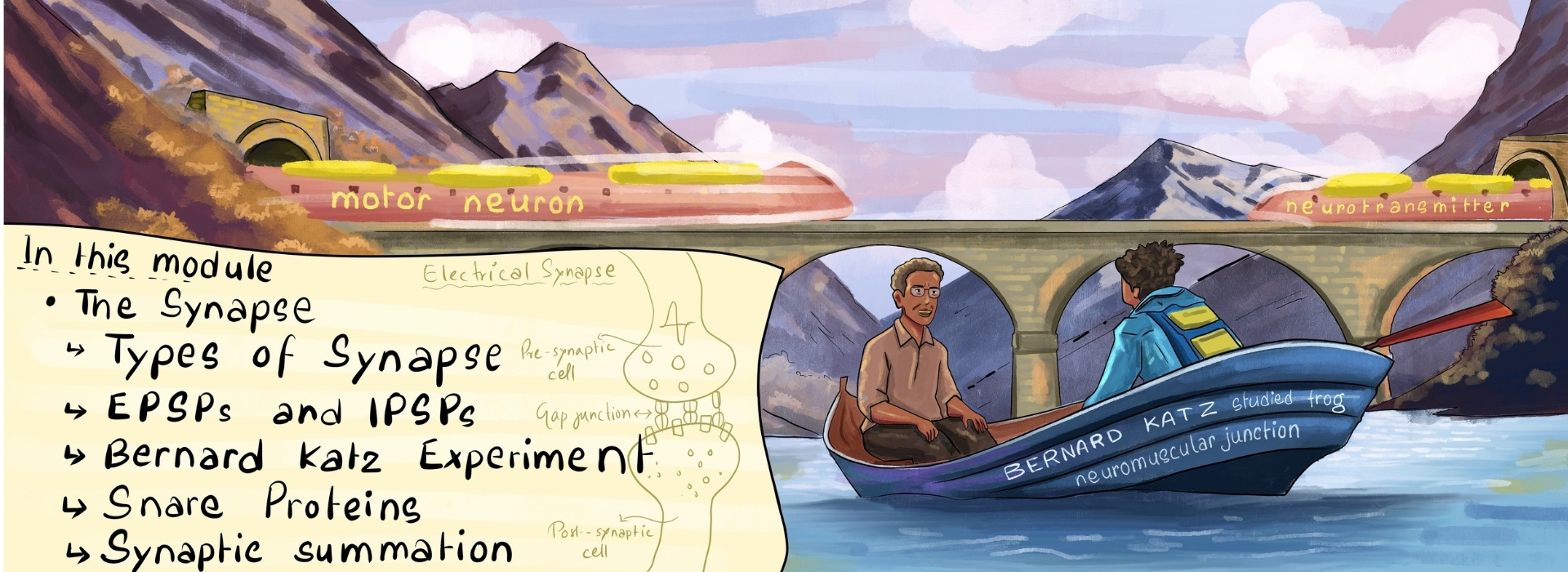
Module 5: The Synapse#
Understanding synaptic transmission and its role in neural communication.
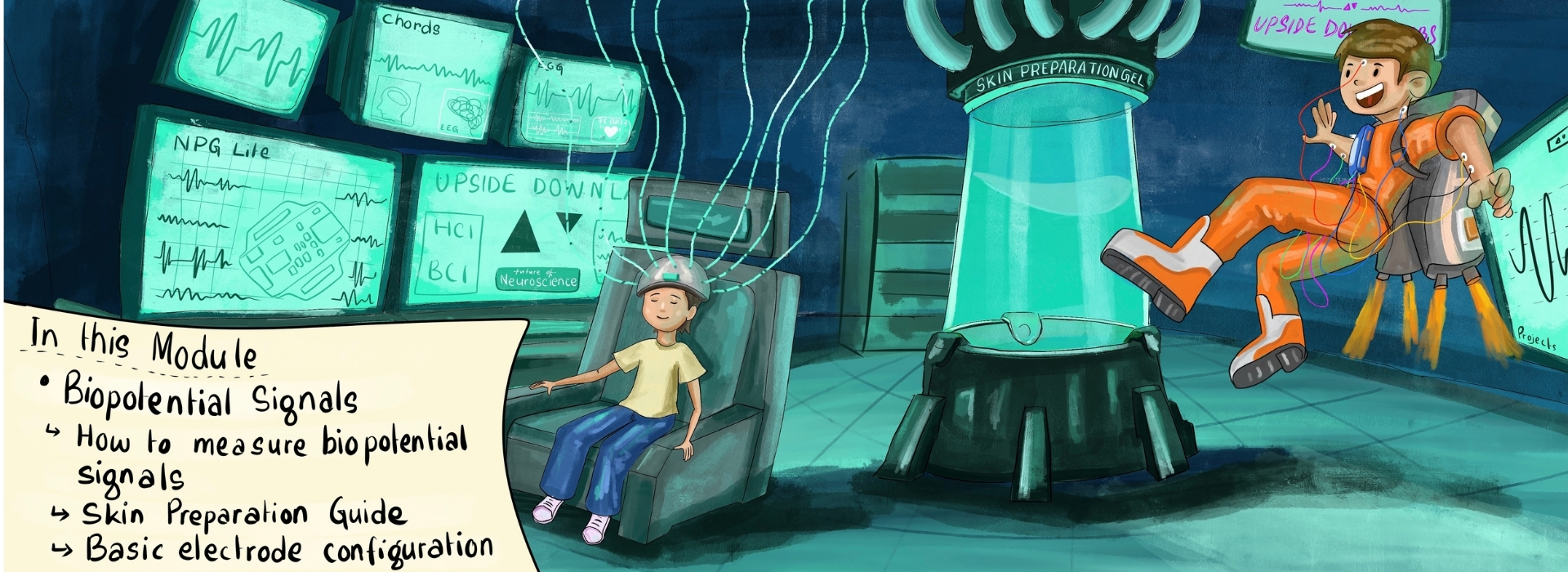
Module 6: Biopotential Signals#
Introduction to biopotential signals and their physiological origins.
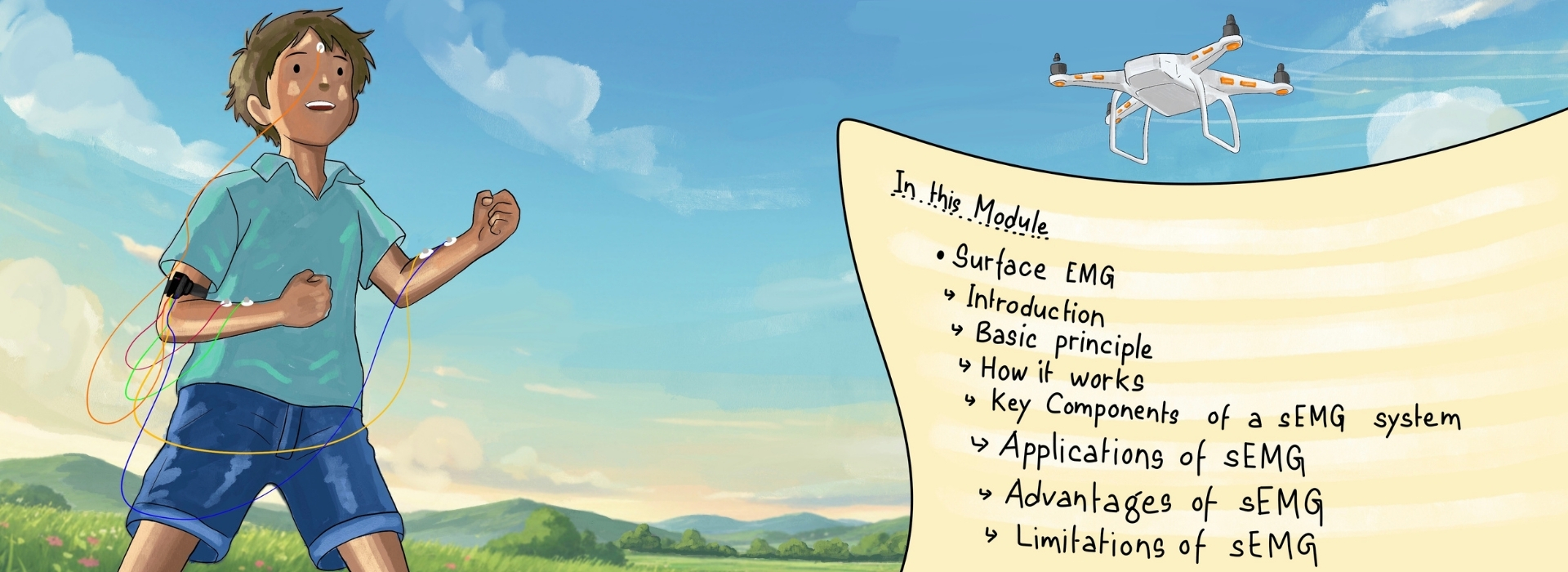
Module 7: EMG#
Comprehensive coverage of electromyography (EMG) and muscle electrical activity.
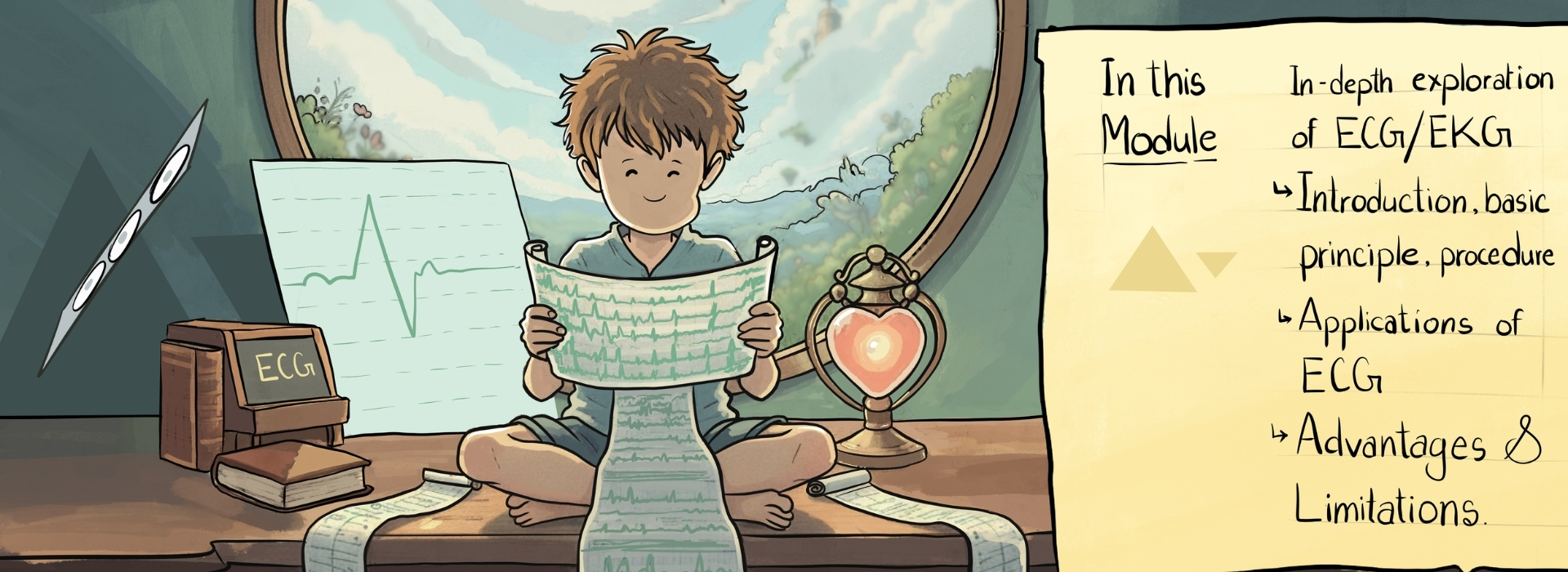
Module 8: ECG/EKG#
In-depth exploration of electrocardiography (ECG/EKG) and heart electrical activity.
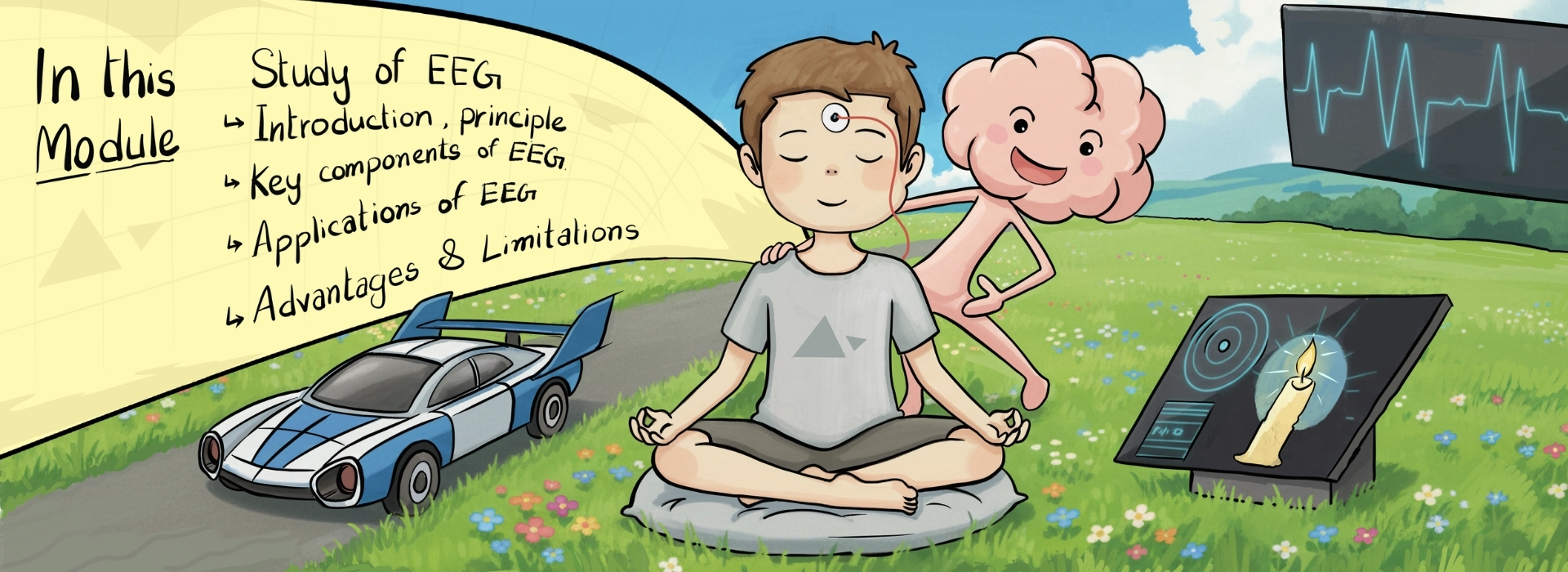
Module 9: EEG#
Detailed study of electroencephalography (EEG) and brain electrical activity.
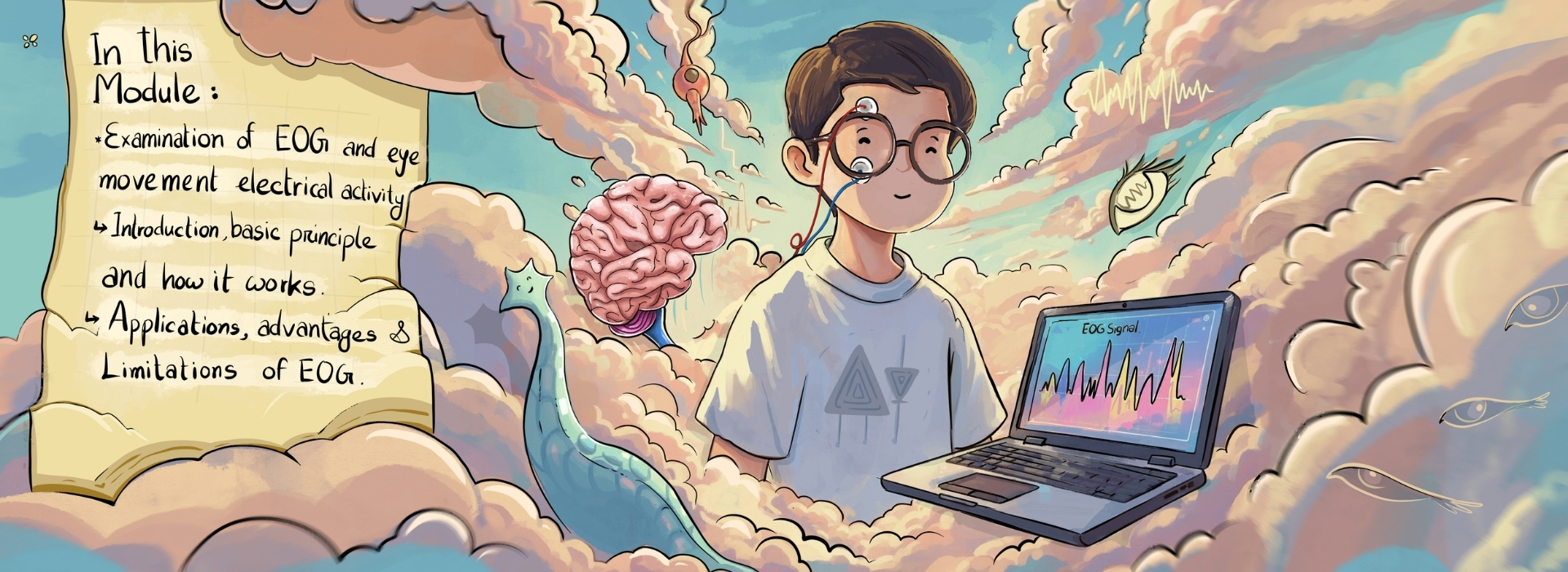
Module 10: EOG#
Examination of electrooculography (EOG) and eye movement electrical activity.
Module 11: Conclusion#
Summary of key concepts and practical applications covered in the course.