

Module 11 : Conclusion#
11.1 Summary of Key Concepts#
In this course, we have covered a wide range of topics related to neuroscience and biopotential signals, including:
The fundamentals of neuroscience and the nervous system
Key biopotential signals such as EEG, EMG, ECG, and EOG, including their physiological origin and basic characteristics
Methods for acquiring and analyzing biopotential signals
Important challenges such as noise and motion artifacts
Applications of biopotential signals in research, healthcare, and technology
Hands-on projects and real-world applications
This course also connects concepts from resting membrane potential and action potential to larger signals like EEG and EMG, showing how neural activity becomes measurable signals.
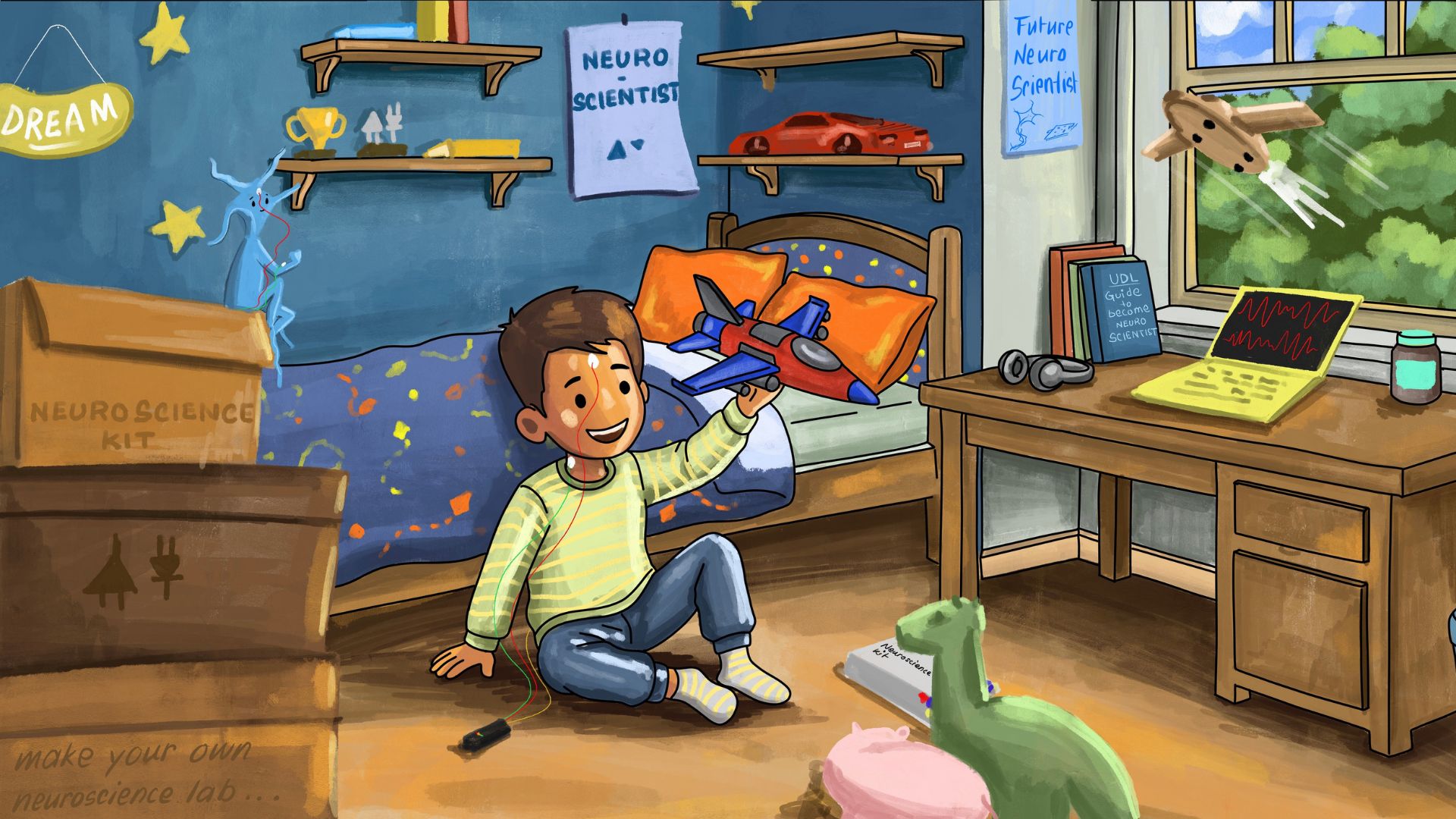
As you continue your journey in neuroscience, remember that the field is constantly evolving, and there are always new discoveries and innovations on the horizon. Stay curious, stay ethical, and keep pushing the boundaries of what is possible with biopotential signals.
11.2 Role of Upside Down Labs#
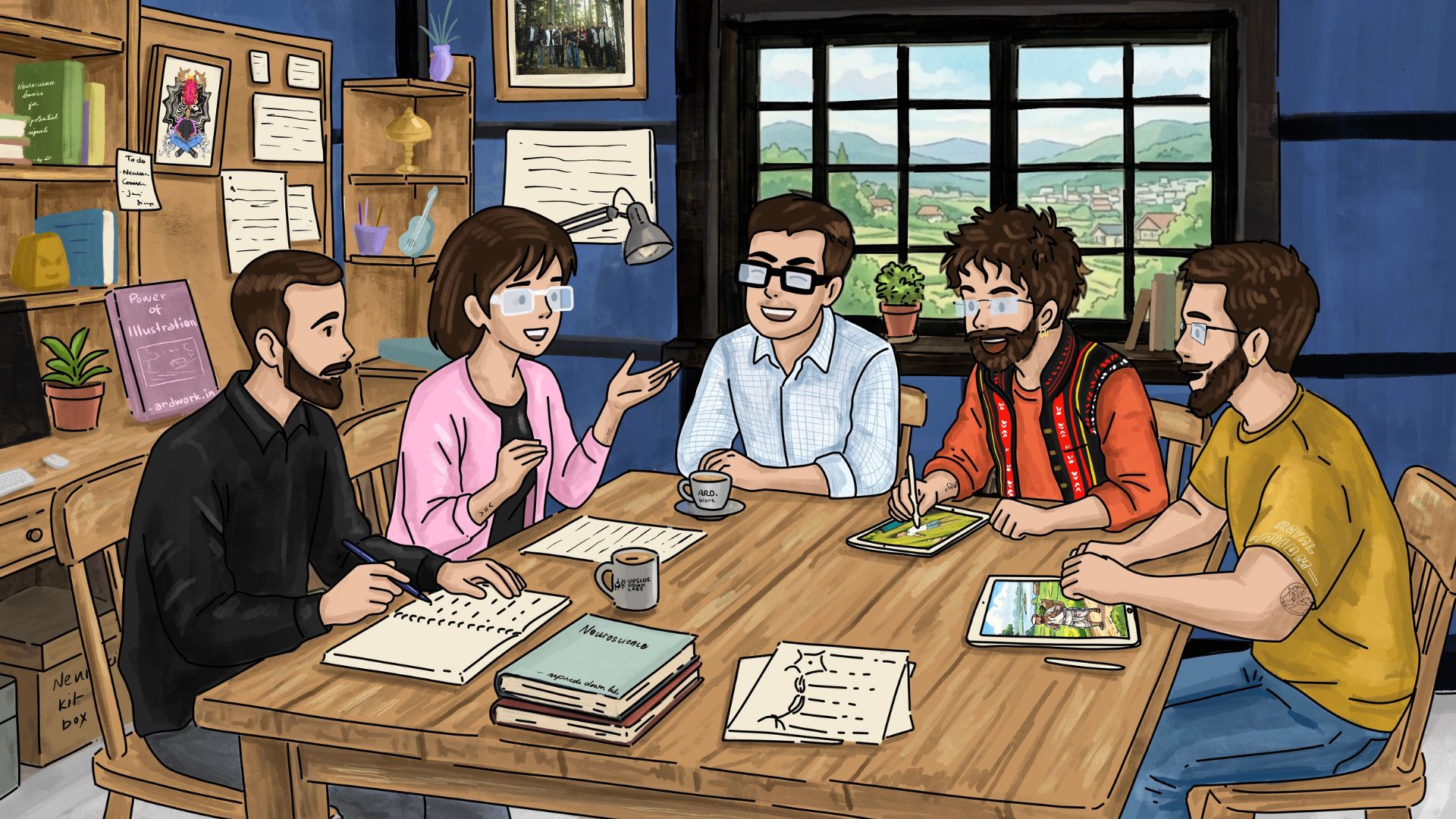
This course would not have been possible without Upside Down Labs.
Upside Down Labs is committed to :
Open-source research graded hardware and software
Affordable neuroscience tools
Education-first innovation
Enabling hands-on learning through real devices
Their hardware devices such as Neuro PlayGround Lite and BioAmp EXG Pill, along with the open-source Chords software suite, bridge the gap between theoretical neuroscience and real-world signal acquisition.
By supporting this course, Upside Down Labs has demonstrated that innovation and empathy can coexist, and that meaningful opportunities can be created even outside traditional academic or corporate systems.
11.3 Looking Forward#
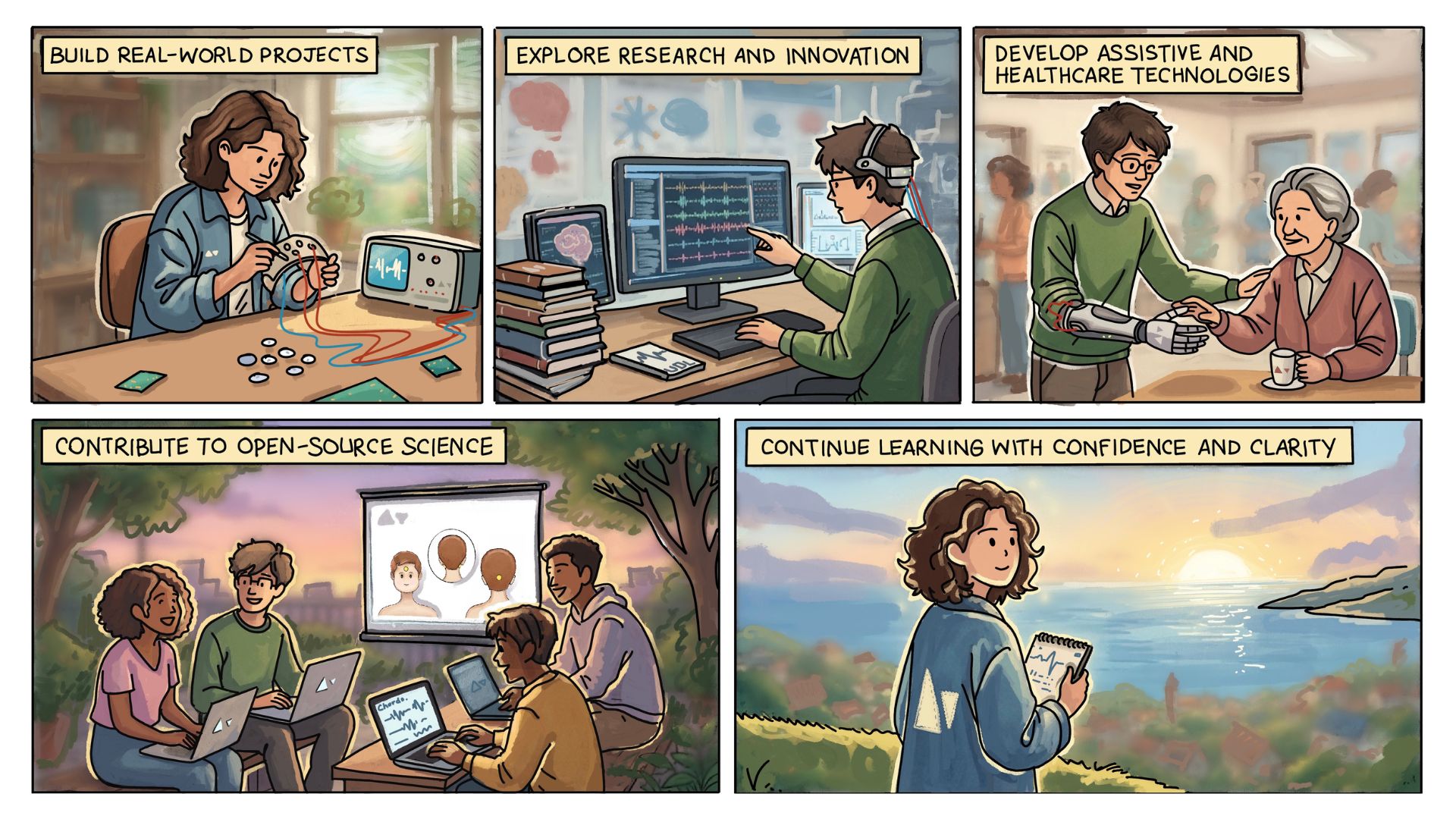
Neuroscience and biopotential signal acquisition are rapidly evolving fields. With the strong foundation you have gained through this course, you are now equipped to:
Build real-world projects
Explore research and innovation
Develop assistive and healthcare technologies
Contribute to open-source science
Continue learning with confidence and clarity
Further develop skills using tools like MATLAB, Python, and open-source platforms
The future of neuroscience belongs to curious minds, ethical innovation, and accessible knowledge, and you are now part of that future.
11.4 Final Message#
Thank you for being part of this learning journey. May this course not only enhance your technical understanding but also inspire you to create, contribute, and care for science, for society, and for yourself. Apply these concepts in practice, think critically, and work towards building meaningful neuroscience applications.